Interface
‘The interface constitutes the gateway through which the reservoir of human agency and experience is situated with respect to all that stands outside of it, whether technological, material, social, economic, or political.’
Hookway sees interfaces as the crucial sites where the human and the non-human meet and influence each other, with the interface simultaneously establishing both separation and connection. It is a philosophical perspective on technology: interfaces shape not only how things function, but also how we exist and experience the world in an increasingly technological environment

Marcel Duchamp
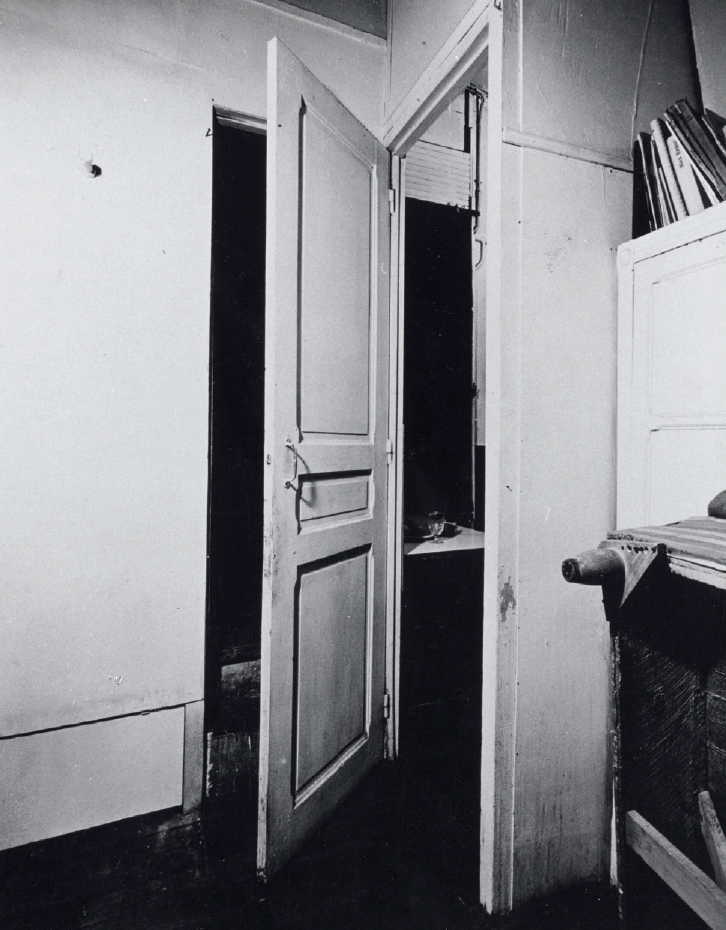
Perhaps one of Marcel Duchamp’s most obscure pieces is his Door, 11 rue Larrey. This was a door that that Duchamp had a carpenter construct in 1927 in the corner of a room in Duchamp’s apartment. Because of this location, the door closed one entrance when it opened the other, thereby contradicting the French proverb ‘Il faut qu’une porte soit ouverte ou fermée’ (A door must be either open or close).